
Home » Equatorial Guinea AFCON 2025 Preview: Can the Underdogs Shock Again?
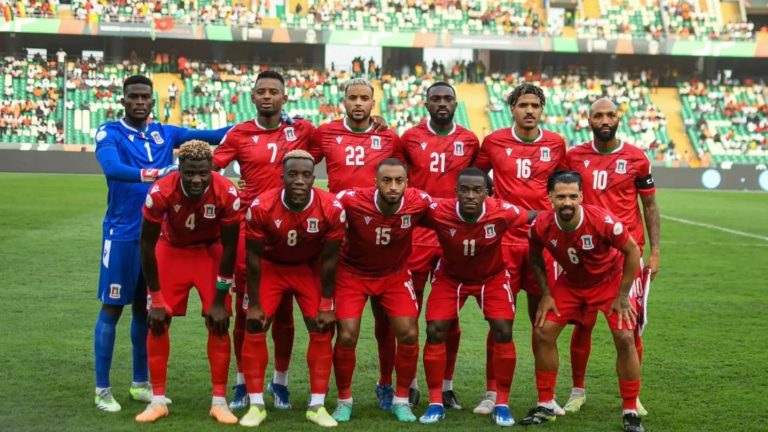
Going into the Africa Cup of Nations, nobody will expect much from Nzalang Nacional, but that may not necessarily be the case based on recent history. Once more they come as a team who can shake AFCON predictions upside down.
With their most recent AFCON performances solidifying their reputation, Equatorial Guinea will head into this tournament prepared to irritate, to fight, and to be an underdog and shock everyone. Also, the team has a unified mentality with high motivation and are eager to demonstrate that their incredible runs in previous tournaments have been not just luck.
Equatorial Guinea’s journey through the AFCON qualifiers offered a clear snapshot of who they are as a team. The path was rarely smooth, yet the outcome highlighted both resilience and competitive maturity.
It was never easy, but the end showcased resiliency and competitive maturity. Placed in a tough group that included Algeria, they sensibly avoided panic and concentrated on collecting rather than dominating. It was that calm, stubborn approach that paid dividends – qualification with space to spare.
Few AFCON matches produced more shock than their ruthless 4–0 demolition of hosts Ivory Coast. Critically, that result was not built on luck but on clinical execution and deep tactical clarity. Therefore, their reputation as giant-killers is now firmly established.
Equatorial Guinea head into AFCON 2025 wearing a familiar label as the group wildcard. They lack the consistent depth and global profiles of Africa’s elite, yet their strong tournament track record commands extreme caution. Time and again, their compact structure and fearless mentality have undermined confident, possession-heavy opponents. For that key reason, many AFCON predictions quietly acknowledge their significant disruptive potential.
Experience represents another key advantage for the squad. There is a solid core group that has played more than one AFCON tournament together, which naturally leads to their trusting each other in chaos and high-stakes situations.
That experience often shows in superior game management, particularly when defending small leads late in games. Consequently, the team looks stable and mentally prepared.
Reaching the Round of 16 feels like a realistic target for the Nzalang Nacional. From there, knockout football tends to reward discipline and belief equally, both of which strongly define Equatorial Guinea’s tournament identity.
Coaching continuity has long underpinned Equatorial Guinea’s AFCON competitiveness, although that stability was tested severely in the past year. Juan Micha Obiang shaped much of the modern identity of the team, guiding them to consecutive knockout stages.
Equatorial Guinea was able to develop a very defined tactical strategy based on defense and the vertical transition of the ball under Micha’s direction. At numerous African Cup of Nations (AFCON) tournaments that strategic approach produced many positive results.
He also liked to implement and utilize well organized and structured systems where the entire team shared the responsibility for defending as a group. Michas’ teams often freely gave up the ball while relying upon their positioning and timing rather than aggressively pressuring.
Following a temporary dismissal after the unfortunate strike-related fallout, Guillermo “Ganet” Nguema initially stepped into the caretaker role. However, the subsequent reinstatement of Juan Micha confirms the players’ faith and the federation’s desire for stability before AFCON 2025.
There can be no other than Emilio Nsue for Equatorial Guinea. He has been the leading goalscorer at each AFCON since being called up, and he will be the team’s captain. While his influence is certainly felt from within 12 yards of the goal line; it also extends into the entire team.
His presence within the squad is defined by leadership, absolute professionalism, and remarkable composure. Importantly, when belief wavers within the group, Nsue instantly steadies it, offering a calming, veteran presence.
The famous hat-trick against Ivory Coast instantly entered AFCON folklore, becoming a benchmark for the team’s potential. That incredible individual performance alone reshaped how opponents were forced to approach Equatorial Guinea.
While age has naturally reduced his pace slightly, Nsue’s elite intelligence completely compensates for it. These critical instincts matter most in the high-pressure environment of knockout football.
Once reinstated, confidence returned quickly across the entire squad. As AFCON 2025 rapidly approaches, Nsue remains the clear emotional reference point and the spiritual leader. If another incredible upset materializes, his fingerprints will almost certainly be found on the resulting AFCON results.
Basilio Ndong offers a compelling subplot within this Equatorial Guinea AFCON 2025 preview. The left-sided defender or winger brings explosive energy, pace, and essential tactical discipline in equal measure to the flank.
His all-round game plays directly into Juan Micha’s counter-attacking system. Whenever there is space down his side of the pitch, Ndong pushes into it in an assertive fashion, adding much-needed width.
This kind of incredible flexibility really ratchets up his total value to the team. Ndong has the capacity to play like a classical offensive winger on the wing and stretch back into full-back when necessary.
Therefore, that adaptability allows Equatorial Guinea to rapidly adjust their defensive or attacking shapes mid-match without needing a substitution. During previous AFCON matches, his tireless work rate and tactical adherence earned crucial trust against technically superior opponents.
Additionally, another name gaining quiet importance is the imposing centre-back, Saúl Coco. He combines composure on the ball with dominating aerial strength, traits that are completely vital against physically imposing sides.
Experience deep understanding of defensive spacing expertly limits opponents’ opportunities between the lines. This is the foundation of their success in difficult AFCON matches.
In midfield, the authoritative Pedro Obiang anchors the entire system with calm authority and superb positioning. His reliable ability to retain possession under intense pressure allows the team to instantly reset their shape when defending deep.
Importantly, alongside him, more mobile midfielders prioritize relentless ball recovery and perfect transition timing. Creativity from this central area is viewed as secondary to absolute defensive balance and control.
The primary characteristics of Equatorial Guinea’s attacking style is that of efficiency and speed. Nsue’s ability to lead the line and create opportunities through the width of the pitch, creates quick vertical options as opposed to building up from the back in a slower manner.
Tactically, therefore, clarity remains their strongest and most reliable asset, particularly when meticulously managing narrow leads late in tense AFCON matches.
Goalkeepers: Jesus Owono (FC Andorra), Manuel Sapunga (Sekhukhune Utd), Aitor Embela (Soneja).
Defenders: Esteban Orozco (FC Arges), Marvin Anieboh (UD San Sebastian de los Reyes), Carlos Akapo (Amazonas), Saul Coco (Torino), Basilio Ndong (KF Tirana), Michael Ngaah (Real Avila), Nestor Senra (Recreativo Huelva), Charles Ondo (Portland Timbers), Javier Mum (Maestro United).
Midfielders: Jannick Buyla (CD Numancia), Omar Mascarell (Mallorca), Pablo Ganet (Persita Tangerang), Alex Masogo (Beroe Stara Zagora), Alex Balboa (CD Lugo), Jose Machin (Vis Pesaro), Pedro Obiang (Monza), Santiago Eneme (Sparta Prague).
Forwards: Iban Salvador (Wisla Plock), Josete Miranda (PS Kalamata), Gael Joel Akogo (Recre Granada), Jose Nabil Ondo (Nantes B), Luis Asue (Shanghai Shenhua), Dorian Hanza (Viborg), Loren Zuniga (Real Madrid Castilla), Emilio Nsue (CF Intercity).
The AFCON history of Equatorial Guinea has been an incredible counterpoint to outside expectations. The fact that they have never gone out early since their first appearance at the 2012 tournament is the ultimate compliment to a small country.
Every single appearance has ended with progression to the knockout rounds, a track record that compares incredibly favorably with more established, larger African nations. Their legacy in this tournament is most definitely determined by their consistent, disciplined competitive nature as opposed to that of sporadically brilliant performances.
At this point in time, as we approach AFCON 2025, sustaining that impressive knockout record represents a very realistic goal. History strongly suggests that when Equatorial Guinea successfully qualify, they compete fully and fearlessly. Their ability to deliver unexpected AFCON results has become legendary.
The Equatorial Guinea AFCON 2025 preview illustrates clearly how this team is based on trust in each other as well as in themselves, and has developed a solid defensive base to allow them to use their offensive skills to disrupt opponents who may be more skilled but are also often less experienced, and therefore more likely to become complacent.
Their AFCON matches were recent enough to make it clear they are capable of either frustrating bigger sides into error or taking advantage of those errors.
As long as team cohesion holds and tactical discipline remains deadly accurate, they should be in a position to think very seriously about targeting another big knockout-phase performance.
With the Nzalang National returning once more, it would be foolish for any of their competitors to dismiss them in what is often a tournament built on unexpected underdog runs.