
Home » Ivory Coast AFCON 2025 Guide: Defending Champions Look to Shock the Continent Again
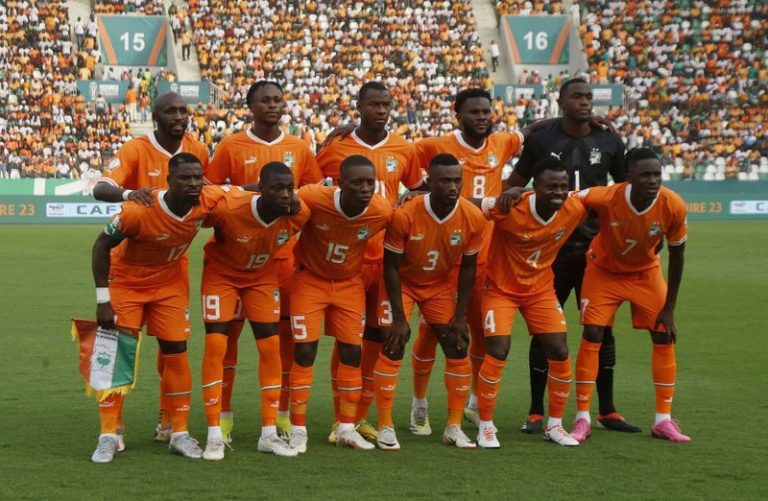
The excitement is real, and the question is simple: Can Ivory Coast AFCON 2025 replicate? They come into the tournament as its defending champion, and that hard-earned mantle casts everything around it in a certain light.
Their unbelievable 2023 triumph on home soil transformed belief across the entire squad and restored national confidence in the Elephants. Consequently, the team knows exactly how to survive and thrive under immense pressure. They understand how to get the results needed when it truly matters.
The Ivory Coast were definitely pushed harder than anyone thought they might have been on the road to this AFCON. Pooled in a tough Group G, they ended up second behind Zambia on 12 points after six competitive matches.
Even though qualification never genuinely felt in danger, the campaign importantly exposed specific areas that still require immediate attention and refinement. This necessary exposure is a gift for a champion side.
At home, the Elephants were practically unstoppable, barely losing points or exposing any vulnerability. For example, a crucial 2–0 win over Zambia in Bouaké sent out a clear early signal of intent and demonstrated their counter attacking mentality.
Jean-Philippe Krasso’s clinical goals perfectly reflected a side fully capable of punishing defensive mistakes quickly and decisively. Furthermore, the overall team unity seemed to strengthen with every victory earned on Ivorian soil.
Away matches, however, proved consistently more challenging for the squad. Crucially, surprising losses in Zambia and Monrovia showed clear defensive lapses and worrying moments of lost concentration from key personnel.
Still, those specific defeats were not failures; they provided valuable, irreplaceable lessons ahead of a significantly tougher AFCON tournament environment. Indeed, the coaching staff utilized every match as a learning opportunity.
Since officially qualifying for the main event, Ivory Coast have intelligently leaned on international friendlies to test team balance and necessary rotation options. Specifically, challenging matches against strong continental rivals like Morocco and Algeria offered evidence of deep resilience, even without consistently perfect results.
Importantly, influential leaders such as Franck Kessié and Sébastien Haller returned to excellent physical condition during this period. Although their form has naturally fluctuated over the last year, tournament mentality undeniably remains their single biggest strength. Truly, when the stakes rise, Ivory Coast usually responds with championship-winning performances.
They have negotiated these tough away days and this will stand them in good stead when they travel internationally to Morocco. They know there is no escaping the need for 90-minute performances against the best teams in Africa.
The Ivorians will come to Morocco as one of the clear, deserving favourites and despite fairy tale-inspired dreams from fans; expectation is absolutely the reflection of such high favourites status. There is enormous pressure on them as the current holders of the trophy, but there is also a sense of self-belief that it is very difficult to replicate in any other team thanks to recent history.
Many respected AFCON predictions consequently place them firmly among the top three contenders for the entire trophy. The initial group draw offers absolutely no easy path to the knockouts; every match will be a fierce battle. Firstly, perennial heavyweights Cameroon bring proven pedigree and tactical discipline.
Secondly, Gabon offer raw physical strength and counter-attacking danger. Finally, Mozambique add frustrating unpredictability that can disrupt any established rhythm.
Momentum will matter much more than past reputation during the initial group stage. Consequently, a strong, convincing opening match performance could instantly settle any lingering nerves and quickly silence early doubts from the media or fans. By contrast, an unconvincing beginning instantly would heap all the unwelcome disruptive pressure on to the entire squad
Emerse Faé stands proudly at the center of Ivory Coast’s modern success story, embodying the nation’s new ambition. His rapid ascent from assistant to title-winning head coach is easily one of AFCON’s most truly remarkable stories. What is striking, however, is that at only 41, there’s the emergence of a new dynamism, for African coaches have shown they too can compete on the global stage.
It was in the 2023 that Faé took control amid scenes of incredible chaos. Having lost twice in the groups, Ivory Coast looked as though their tournament was over once and for all. Instead, he miraculously rebuilt team belief and simplified complex player roles almost instantly, providing essential clarity under pressure.
This immediate impact showcased his natural leadership ability. He expertly adjusted formations to suit different opponents and strengthened the necessary defensive structure while trusting players who readily embraced higher responsibility.
Furthermore, he proved that trust and clarity can overcome complexity. Since officially becoming the permanent head coach, Faé has firmly doubled down on making tough but necessary decisions regarding personnel.
High-profile omissions from the squad have naturally caused public debate, but maintaining overall squad harmony remains his absolute number one priority. Players consistently and publicly praise his open, transparent communication style.
That deep connection has proven absolutely vital when the team must perform under maximum pressure. Defending an AFCON title instantly raises external expectations, yet Faé has already convincingly shown that he thrives when public scrutiny increases.
It has been that way since the emotional twilight of Didier Drogba’s Ivory Coast career. His vast impact keeps molding mentality, ambition and deep-seated belief across multiple generations of players. To countless of players in the current squad, he is still the ultimate reference point for professionalism and success. His legacy is permanent.
Drogba scored 65 goals for his country in a fantastic career that saw the Ivory Coast’s ‘golden generation’ secure three World Cup participations. Under his excellent leadership, Ivory Coast played in two AFCON finals in the mid-2000s. While both those frenetic finals understandably resulted in agonizing defeat, his influence as a beacon of hope.
And he represented much more than just goals – at times of civil strife in Ivory Coast, Drogba was a force for national unity. As a result, this deep emotional connection remains deeply felt among the Ivorian population to this day.
In the elite club game, his iconic Champions League heroics with Chelsea immediately sanctified him on the global stage. Perhaps even more importantly for Ivory Coast, he left no doubt — none whatsoever — that Ivorian players should be playing at the very highest level of world football. He was a door-opener for so many others.
He didn’t win the coveted AFCON trophy himself, but the subsequent successes of 2015 and 2023 are somehow linked to his work and indomitable spirit. Some of the best players now in the league were children who looked up to him for dedication and effort. Certainly, whenever Ivory Coast hunt for glory in these AFCON games, Drogba’s stunning legacy is silently – but massively – pushing them on.
Oumar Diakité always remains a young player that is able to instantly change the momentum of any tournament on his own. He’s only 21, but his speed is blistering, his confidence is superlative and his finishing, intuitive and surgical. And the speed of his having developed should ensure an easy and thrilling attacking transition for the national team over the coming couple of years.
At club level, Diakité has caught a lot of eyes with his explosive displays for RB Salzburg and Cercle Brugge. His sheer rapidity in tight spaces never fails to rattle oppositions, including some of the most seasoned defenders, and open up space for others. His signature late-game energy and pressing ability remain one of his biggest and most valued assets for the national coach.
He has scored a wealth of important goals in the closely-contested AFCON qualifiers, mostly coming off the bench as an impact substitute. That specific, demonstrated efficiency makes him an absolutely ideal impact substitute for high-stakes matches. Crucially, in the unique environment of tournament football, dynamic profiles such as his often decide close matches in the final moments.
Ivory Coast boast one of the most balanced and full-squad teams in Africa with confidence. From top to bottom there is the depth to do anything and everything tactically without having any drop off, loss of quality or a lack of high performance players. The head coach, Faé, prefers to shift comfortably between a balanced 4-3-3 and an occasional narrower 4-2-3-1 according to the opponent. It is on that flexibility they rely.
Tactically, Ivory Coast look to control midfield battles before breaking quickly into deadly attacking plays. Against elite-level sides, Faé has also shown immense comfort in sitting deeper and utilizing rapid countering attacks.
Goalkeepers: Yahia Fofana (Caykur Rizespor), Mohamed Kone (Charleroi), Alban Lafont (Panathinaikos).
Defenders: Emmanuel Agbadou (Wolverhampton Wanderers), Willy Boly (Nottingham Forest), Ousmane Diomande (Sporting CP), Guela Doue (RC Strasbourg), Ghislain Konan (Gil Vicente), Odilon Kossounou (Atalanta), Evan Ndicka (AS Roma), Christopher Operi (Istanbul Basaksehir), Armel Zohouri (FC Iberia 1999).
Midfielders: Seko Fofana (Rennes), Jean-Philippe Gbamin (Metz), Christ Inao Oulai (Trabzonspor), Franck Kessie (Al Ahli), Ibrahim Sangare (Nottingham Forest), Jean-Michael Seri (NK Maribor).
Forwards: Vakoun Bayo (Udinese), Oumar Diakite (Cercle Brugge), Amad Diallo (Manchester United), Yan Diomande (RB Leipzig), Sebastien Haller (Utrecht), Jean-Philippe Krasso (Paris FC), Bazoumana Toure (Hoffenheim), Wilfried Zaha (Charlotte FC).
This AFCON trip of Ivory Coast is made up with despair, resilience and success! Those 1992, 2015 and most recently, 2023 prestigious titles make them definitely one of Africa’s football elite nations. Every triumph has clearly stamped a big upside-down exclamation mark on the country’s sporting storyline. In particular, these victories secure their long-range legacy.
The iconic 1992 title came after an epic, nail-biting penalty shoot-out victory over archrivals Ghana. That particular, heartfelt moment heralded Ivory Coast as a real continental power in a manner that was impossible to ignore. However, as it unfortunately turned out it was a long and frustrating years of near misses and underwhelming performances which tested the loyalty of the whole country.
The team’s credibility was repeatedly tested by heartbreaking final losses in 2006 and 2012. Twice they had teams packed with superstar quality, and twice fate – in the form of penalty shootouts – has proven to be a cruel mistress. Those, of course, were painful defeats during a frustrating era for the so-called ‘golden generation’ that never did capture the biggest prize.
Redemption would come in 2015, once again against Ghana, and once again settled in cinematic fashion by penalties. That long-sought victory suddenly relieved a heavy psychological burden that had been dragging the entire country down for decades. So it effectively justified years of crucial long-term investment and commitment to national team set-up and youth development.
The fairytale 2023 victory totally re-wrote the record books of AFCON history and logic. To firstly lose the first two group matches and then launch an extraordinary comeback to win the tournament was a complete shock to every nation on the continent.
It was their versatility, force of will and remarkable solidarity that got them through the impossible. And now, with yet another significant title defense front and center, Ivory Coast stands firmly on the precipice of history again. They’re looking to win consecutive fights, something that’s hardly ever done.