
Home » Sudan AFCON 2025 Team: Shock Qualifiers, Squad Analysis, and Tournament Predictions
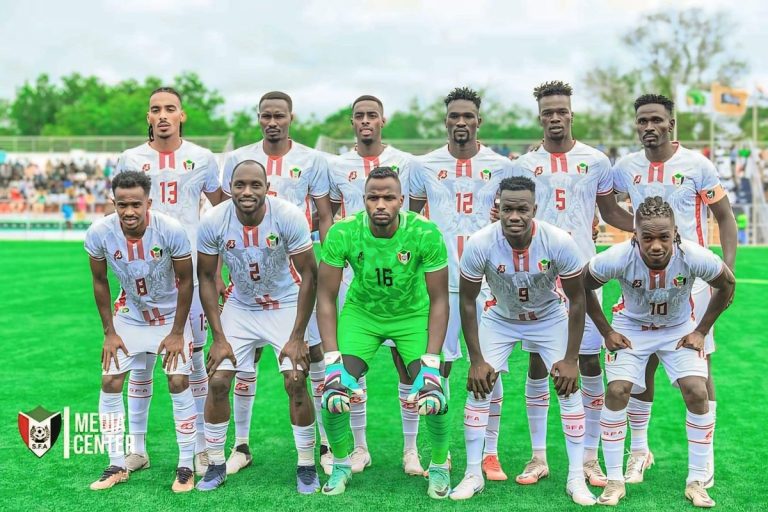
It is no doubt the most incredible story of Africa’s football of late for the Sudanese team in qualifying for the AFCON 2025. With the ongoing internal conflict, Nile Crocodiles were unable to host a home game, leading them to qualify after making most of their matches at a neutral venue.
Sudan came second in Group F on 8 points and only just edged Ghana. That achievement alone absolutely reshaped how everyone sees Sudan’s national team. What happened during the AFCON qualifiers? Sudan showed determination and talent.
They claimed four from Ghana, including in a historic 2-0 victory that really shook the continent. This achievement ensured Sudan’s return to the African Cup of Nations (AFCON) as they had been absent from the previous AFCON.
The big thing is they did a great job of defending. In all competitive games during 2024, Sudan lost only one game and made it very difficult on several strong opponents through an organized team shape.
Due to travel problems, friendly games were limited, but they played a good number of competitive games and kept their focus and readiness at a high level. Definitely, Sudan is coming to AFCON 2025 with a confidence that is not based on throw-in-soil type things but is a result of actual, verifiable achievements. .
Compared to other groups, this one will be easier for Sudan to get out of as it consists of Algeria, Burkina Faso, and Equatorial Guinea. The reality is that their best chance to get points will probably be when they face Equatorial Guinea.
That specific match could very well decide if they finish third and maybe, just maybe, qualify for the knockout stage. A win there would immediately pressure the group’s bigger names and completely shift the dynamic. Even securing a hard-fought draw could be super valuable, depending on other key AFCON results across the wider tournament.
It may be the only game to decide whether they finish third and, perhaps, even have a chance to go through to the knockout stage. Coach Kwesi Appiah constantly stresses mental strength, reminding players that reputation doesn’t win games, period.
Kwesi Appiah has genuinely transformed Sudan’s football fortunes in a surprisingly short time. Appointed late in 2023, the respected former Ghana captain took over a squad dealing with huge instability both on and off the pitch. Yet, results improved almost immediately under his calm, clear tactical vision.
Appiah is an extremely experienced coach at the international level. He was the one who coached (Ghana) at the 2014 World Cup, so he really knows about the pressure and stress of that football tournament management.
That deep background shows immediately in Sudan’s impressive composure during tight, nervy matches. As far as tactics, Appiah tends to incline towards defensively solid systems such as 4-4-2 and 4-2-3-1.
Off the pitch, Appiah single-handedly raised the entire organization’s professional standards. Training intensity, vital recovery routines, and general player discipline all got noticeably better under his demanding but fair tenure.
This minute attention to detail has significantly helped Sudan close the technical and physical gap on stronger African nations. You can see the confidence in his long-term vision; the Sudanese FA extended his contract until 2028.
Also, his experience working with big names and handling national expectations has been key. He knows exactly how to shield his current squad from external political pressures, letting the players focus solely on the upcoming AFCON matches.
Mohamed Abdelrahman is Sudan’s most renowned person in the history of its football. The 32-year-old veteran, known by the nickname “Al Gharbal,” remains Sudan’s primary offensive asset.
Abdelrahman is better than a lot of his team-mates technically as he lets the ball do the work, he is excellent in the air and has intelligent interchanges with other players.
At Sudan AFCON 2025, the team will rely exceptionally heavily on Abdelrahman’s efficiency. Chances might be limited against top defenses, meaning composure inside the box becomes absolutely vital. If Sudan manages to cause an upset or two, you can bet his fingerprints will be all over the decisive moments.
Musa Hussein, just 18 years old, represents Sudan’s dynamic future and growing national ambition. Operating mostly from wide attacking areas, he attacks space aggressively and finishes chances with impressive composure that truly belies his tender years. While his surprising nickname “Kanté” is funny, his playing style is pure, electrifying attacking intent.
Seasoned veterans will handle the defense, sure, but Hussein offers something invaluable: genuine unpredictability. A single decisive run, a moment of brilliance, or a critical assist could easily swing momentum dramatically in Sudan’s favor during a tight encounter. Consequently, for neutrals closely following the various AFCON matches, he immediately stands out as a strong candidate for a breakout tournament performance.
Sudan’s squad is still heavily domestic-based, primarily anchored by talented players drawn from powerhouse clubs Al Hilal and Al Merrikh. That intense local familiarity helps a lot with team cohesion and deep tactical understanding. Crucially, under Kwesi Appiah, player roles are clearly defined and almost never abandoned during competitive matches, promoting total stability.
Midfield structure centers entirely on protection and disciplined play. Holding midfielders focus ruthlessly on intercepting play and shielding the defense. Box-to-box options, like the energetic Abdelrazig Omer, add vital running without sacrificing the team’s shape. This unit is the absolute engine room for the Sudan AFCON 2025 effort.
In attack, Sudan overwhelmingly favors swift counter-attacks and dangerous set pieces. The iconic Abdelrahman leads the line, supported by fast runners who use the space created. Corners and direct free kicks are often the best opportunities to score, particularly as Sudan is a known aerial dominant side.
Goalkeepers: Ali Abu Eshrein, Mohamed Elnour, Monged Elneel.
Defenders: Mohamed Saeed, Altayeb Abdelrazig, Mustafa Abdelgadir, Yasser Awad, Bakhit Khamis, Mazin Mohamedein, Awad Zaid, Ahmed Abdelmonem, Mohamed Kesra.
Midfielders: Abuaagla Abdalla, Walieldin Khidr, Abdelrazig Omer, Ammar Tayfour, Salaheldin Adil, Musa Hussain, Sheddy Ezeldin, Amar Yunis.
Forwards: Yasser Mozamil, Mohamed Abdelrhman, John Otenyal, Mohamed Eisa, Elgozoli Hussain, Abobaker Eisa, Mohamed Teya.
Sudan’s long AFCON history is full of deep, fascinating contrasts. They were among the first African Football Federation’s trailblazers competing at the very first tournament held in 1957. The group was soon achieving success as they took runner up position in 1959 and had the distinction of winning the first ever Championship, on home soil, in 1970.
That historic 1970 victory is still the pinnacle of Sudanese footballing success today. A team of legends led it into the record books for African football history. Unfortunately however, Sudan suffered through a major decline as it did not compete at several subsequent tournaments for the remainder of the thirty years following.
Sudan’s ability to advance through a difficult round of AFCON Qualifiers clearly indicates that they can compete at this level. The discipline, faith and perseverance are the three key components of the teams’ game plan.
In addition, while moving on from Group E will be difficult, Sudan has already demonstrated that a teams’ history or reputation means nothing once the game begins. This team is here to fight, and we’re here for it!