
Home » Uganda Club Benefits Programme: How World Cup 2026 Rewards Ugandan Clubs
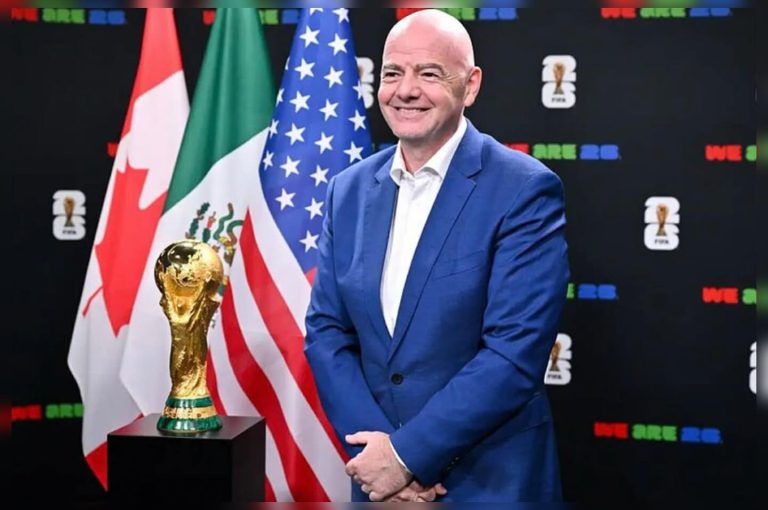
Football in Uganda is ready to usher in a completely new financial era. For many years, teams in the Uganda Premier League (UPL) would release their highest profile players for international duty and be allowed little, or no compensation. That is all about to change with the newly expanded Uganda Club Benefits Programme, which is related to the FIFA World Cup 2026.
FIFA and the European Club Association (ECA) entered into an agreement in March of 2023 that set aside an unprecedented USD 355 million to compensate clubs that release players for FIFA World Cup qualifiers and the final tournament.
So good news for clubs like SC Villa, Vipers SC, KCCA FC and BUL FC that released players to the Uganda Cranes during qualifiers, they will now get actual money paid to them directly. It is more than just symbolic value – it is real money, in what may be a considerable amount.
The Club Benefits Programme (CBP) is a FIFA initiative developed based on the club compensation model and existing Club Benefits Programme. Every time a player leaves his club to go represent his country, the club loses talent and depth, assumes risk of injury and has its domestic plans broken off. The CBP makes sure that doesn’t happen zero-sum for clubs.
For Ugandan teams, this could be a game changer. Most teams live on a shoestring budget and each added source of income matters. Under the new model, clubs are recognized for payments triggered when players participate in qualified World Cup matches. Hence, the Uganda Club Compensation Program will be even more inclusive.
The Expansion is a result of the renewal of the memorandum of understanding between FIFA and the ECA. Both organisations recognised that the growth of football is based not only on national teams but also on clubs that develop and provide talent.
At the 2022 Edition in Qatar, FIFA allocated USD 209 million to 440 clubs from 51 different member associations. It was a positive step, but it only included players participating in the final tournament – many clubs, including smaller clubs in Africa, were omitted as their players were eliminated during the qualification phase.
For the 2026 edition, every club with players participating in qualification will be compensated by FIFA. Giani Infantino stated that clubs are recognized for the part they play in facilitating international football. It is a measure of fairness and global recognition.
For Uganda, it is a game changer. Clubs in Uganda like SC Villa, Vipers SC, KCCA FC and BUL FC often provide players to the national team without receiving a financial value in return. Now they will receive compensation simply for having a player in the qualification cycle.
In UPL terms, even the smallest payment can make a significant impact. Payments can help them procure training equipment, player welfare, youth academy, and stadium upkeep. It may also give clubs an opportunity keep better players around, vs international leagues to boost salaries.
The Uganda Cranes relied almost exclusively on local players. Therefore, clubs in the domestic league are critical. With the CBP assumed, all call-ups are not only pure sacrifice but also pure reward.
The biggest changes is the player pool dollar size. For 2022, FIFA earmarked 209 million USD. For 2026, the pool is 355 million USD. That’s a difference of a 70% increase, and it shows FIFA’s intent to spread wealth wider.
Another significant change is the eligibility requirements. For 2022, FIFA only compensated teams where the players played in the final tournament. For the 2026 World Cup, any club that had a player on the qualifiers roster will be compensated, whether the player is on the final roster.
This is critical for Uganda, because most of the players are from the UPL league. Since it will be paid throughout the qualification period, FIFA is ensuring Ugandan clubs that no one will be left behind.
To put this in perspective, let’s look at some examples. In the 2022 World Cup, big clubs in Europe such as Bayern Munich, Real Madrid, and Manchester City received many million dollars to send players to the World Cup. Top earners received sums at least, on the value scale; they would be enough to pay an entire season’s wage bill for a club in Uganda.
Now just consider to scale the same system to Uganda. If SC Villa gave 3 players to the national team one tournaments, the club would earned tens of thousands of dollars. Considering a club who struggles to earn a match day income, this is a major plus.
While not comparable to European amounts, even some lesser amounts in the Uganda football economy can be transformative by supporting youth program development, medical care or enhanced player contracts.
The Uganda Club Benefits Program is not just about short-term cash injection. It could fundamentally change the financial landscape of Uganda football.
The financial “ripple effect” is clear, more money in clubs leads to better conditions for players, which leads to better performances for the national team.
As optimistic as the rewards sound, it is not without obstacles. CBP is not perfect.
While there are barriers, the overall long-term view for Ugandan football seems to be bright.
The Uganda Club Benefit Program can be a tipping point, provided it is managed appropriately. Money from an international duty can be the lifeline for UPL clubs. The lifeline can allow youth players to remain in Ugandan football longer, because they know their clubs have a backup source of income.
The Federation of Uganda Football Associations (FUFA) could instead benefit from development. Stronger clubs translate to stronger competition, and ultimately better players for the Uganda Cranes. In the end, this could position Uganda better on the way to international tournaments.
If UPL clubs reinvest these funds to enhance facilities (and related development), Ugandan football could bridge the gap with other producing African leagues – namely South Africa’s PSL or Egypt’s Premier League.
The Uganda Club Benefit Program is undoubtedly the sunrise of the local football landscape. FIFA has acknowledged that when clubs invest time and resources into developing players, and releasing players, Ugandan clubs are finally compensated for that investment.
Qualification and the eventual tournament provides payout as well, and in addition to some tournament payout, the Program provides viability and sustainability for UPL clubs. What will be even more important is how the funding gets channeled to support youth, supporting capacity/revenue building via investments in infrastructure and long-term stakeholder strategic building.
Ugandan football has jumped. The question is, will clubs jump at the opportunity to jump to success?