
Home » Zambia AFCON 2025 Predictions: Why the Chipolopolo Will Shock Group A
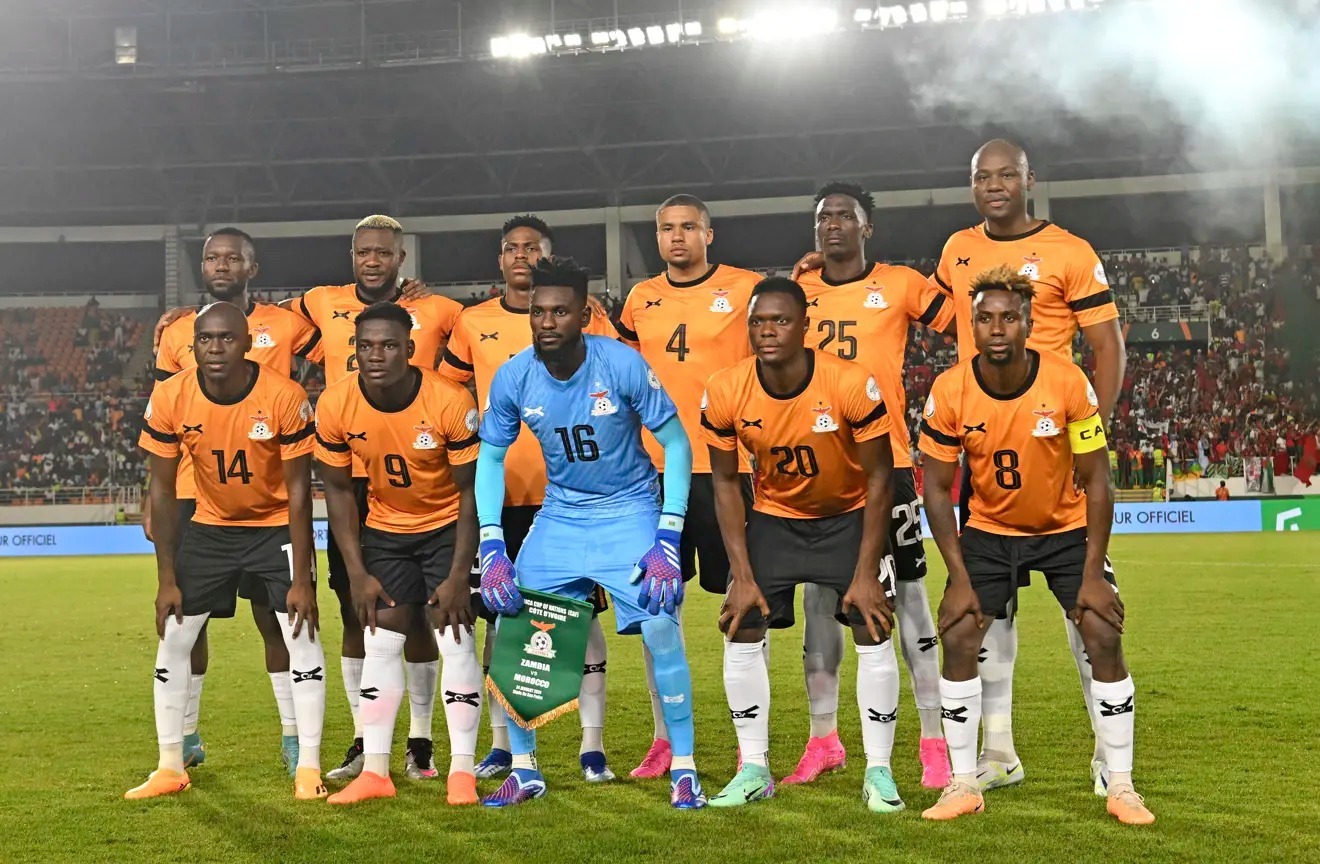

Zambia AFCON 2025 Predictions have caught the attention of serious fans for reasons other than the Copper Bullets being back. While they clearly dominated their qualifying group, which included powerhouse side Ivory Coast, this is evidence that Zambia’s re-entry into Africa has been entirely worked upon.
The fact that Zambia had ended up in a difficult Group A alongside Morocco and Mali makes this group the underdog going the competition, a tag that perhaps Zambia will be grateful of.
In the group stages of the Africa Cup of Nations qualifying round, Zambia topped their group with 13 points from 4 wins, a draw and 1 defeat. It defined the identity of a confident counter-attack style football team.
The route back to the competition began with a 3-2 home win against Sierra Leone where Zambia showed their personality immediately in the game. Although they allowed two Sierra Leone goals they responded with equal urgency to each goal to keep the crowd engaged all the way to the end of the game.
Then just a few short weeks after this win, they confirmed it was no fluke by defeating Sierra Leone 2-0 in the rematch on the road. That match confirmed they can handle different pressure environments, absorb spells of danger, and release forward with timing instead of panic.
The Zambian national team managed to score 9 but only let in four during the AFCON qualifiers, the best defensive record among all teams in their group.
Group A for AFCON 2025 has a strong challenge; it features host nation Morocco and Mali, regular contenders. The squads for Morocco and Mali are deeper, feature more experienced, stable midfielders and have looked comfortable in the knockout stage of tournaments.
Comoros are reshaped-rebuild teams who can strike unpredictably, especially when games change rhythm past 50 minutes. So, Zambia enters as the outsider, a tag that suits them anyway.
Tournament football often blindsides predictions, which is exactly where a team like Zambia quietly collects belief. They rarely need 10 chances to score. In most cases, they need one error and one timing window. Even so, their group math is clear: 4 points minimum to dream, 5 points to feel safer.
First, a victory over Comoros may feel mandatory. Then, a draw against either Morocco or Mali could reshape the group equation sharply. If they score first in 2 group matches, the probability of Round of 16 qualification becomes real and trackable.
Fixture temperament expectations:
Zambia isn’t tournament naïve. Their 13-point AFCON qualifiers result shows a team that arrives through control, not chance. They also defend well when pitch-shell distances grow small. So, if they can score early and defend within reach, they could easily frustrate tournament blocks for an hour.
The Zambia AFCON 2025 predictions will shift radically if they can execute this disciplined approach from the first whistle against Mali.
Moses Sichone leads Zambia into AFCON 2025 matches as a coach who lived tournament football as a player personally. He logged Bundesliga minutes, international penalty duels, and the psychological pitch compression that tournament games demand. This shapes his coaching language: defensive timing, duel density, transition timing, and burst-counter pressure that lasts 6-8 seconds only.
Sichone’s tactical priorities are clear across the training windows leading into AFCON 2025:
Formation expectations:
Sichone avoids formation reinvention mid-tournament. Instead, he chooses role clarity. This matters because teams playing AFCON matches on 7-day fatigue cycles rarely need genius remixes. They need familiarity. He’s not here to transform psychology or identity. He’s here to sharpen it.
Patson Daka is Zambia’s icon going into AFCON 2025 results conversations cleanly and without debate. His time at RB Salzburg gave him Champions League nights, league titles, and finishing permission shaped by pressure environments where space closes fast.
Additionally, his identity refined at Leicester added minutes battled against walls-structured defenses instead of open channel highways. Daka’s influence signals that matter most for Zambia AFCON 2025:
Jadel Katongo arrives as the breakout defender Zambia fans and tournament readers already circle as “One to Watch.” Minutes with Manchester City reserves gave him European training education, ball progression comfort, and composure bypass habits that usually take national teams years to embed. Still, at 21, his future matters now, not later.
He reads angles defensively without shape panic and moves the ball vertically instead of recycling sideways forever. That difference matters because teams defending AFCON matches often need one vertical slicing release as much as they need a sliding tackle.
Katongo may not start every match early. However, he could easily collect headlines if minutes rise past 120+ across the group stage.
If they frustrate midfield builders like Mali, Katongo could quietly shape release surfaces because of his left-foot distribution comfort and duel density timing. That layering is narrative fuel Zambia fans and tournament readers can track cleanly.
Zambia’s preferred 4-2-3-1 shape carries insulation, width triggers, and duel timing that fits AFCON matches conditions cleanly. The structure protects the central areas while maximizing the impact of pacy wingers like Fashion Sakala.
Zambia rarely chases 65% possession. Instead, they chase 65% moments dominance. Even so, they keep the squad identity honest: compact recovery loops, direct releases, overlapping fullbacks to create width, and duel timing to frustrate favorites early. That layering protects psychology for fans and validates narrative permission for neutrals.
Still, midfield distances will matter most for them. Fans should expect quick ball releases into channels early and Sakala overlaps to double width when defensive duels force turnovers high enough to justify forward timing sequences. Even so, tournament football often rewards compact identities over possession puzzles.
And this identity fits them better anyway. The clarity of the structure is the strength they need to navigate the Group A challenges.
Goalkeepers: Lawrence Mulenga (Power Dynamos), Francis Mwansa (Zanaco), Willard Mwanza (Power Dynamos).
Defenders: Stopilla Sunzu (Changchun), Frankie Musonda (Bahrain SC), Kabaso Chongo (Zesco United), Mathews Banda (Nkana), Dominic Chanda (Power Dynamos), Gift Mphande (Zesco United), Obino Chisala (Al-Merrikh), David Hamansenya (Leganes), Benson Sakala (Bohemians 1905), Jadel Katongo (Manchester City-England)
Midfielders: Miguel Chaiwa (Hibernian), Owen Tembo (Power Dynamos), Joseph Liteta (Cagliari), Kings Kangwa (Maccabi Be’er Sheva), Given Kalusa (FC Muza), David Simukonda (Zesco United), Wilson Chisala (Zanaco), Pascal Phiri (Zesco United), Joseph Sabobo (Maccabi Be’er Sheva), Lameck Banda (Lecce), Fashion Sakala (Al Fayha), Lubambo Musonda (Magdeburg).
Forwards: Patson Daka (Leicester City), Jack Lahne (Austria Lustenau), Kennedy Musonda (Hapoel Ramat Gan), Eliya Mandanji (Zanaco).
Zambia’s tournament identity has been present long before their defining 2012 trophy arc. They also made finals in 1974 and in 1994, losing both. Still, the continent remembered these runs anyway because competing under pitch compression is learned long before trophy arcs close.
Yet the defining chapter came in 2012 when Zambia triumphed over Ivory Coast on penalties near the site of the 1993 plane disaster. That emotional core connected psychology, identity, and narrative closure cleanly. That victory against the odds sealed the Chipolopolo’s status as a side who could beat anyone on their day.
Yet after 2012, the qualification misses and the group exits. The current team is seeking to re-establish that reputation for tenacity and shock results. This history acts as both a blueprint and a psychological boost for the new generation.
Tournament permission Zambia carries historically:
Their 2025 qualification matters because it reads like a reboot moment, not nostalgia fiction. Even so, 2012 psychology still buys tournament permission for shorter exchanges, direct releases, duel timing, overlapping fullbacks to buy width, and scoring first to decide psychology lessons early.
Still, the current squad must solve midfield disconnects that collect fatigue faster than statistical confidence. This draft speaks Zambia’s tournament voice honestly and fluently. Their history provides the emotional fuel, but their recent qualifying AFCON results provide the tactical credibility. This balanced foundation gives them genuine belief for the upcoming tournament. They are not just participating; they are planning to compete.