
Home » Africa Sports Merchandise Potential: Why Ignoring It Is Costing Clubs Millions
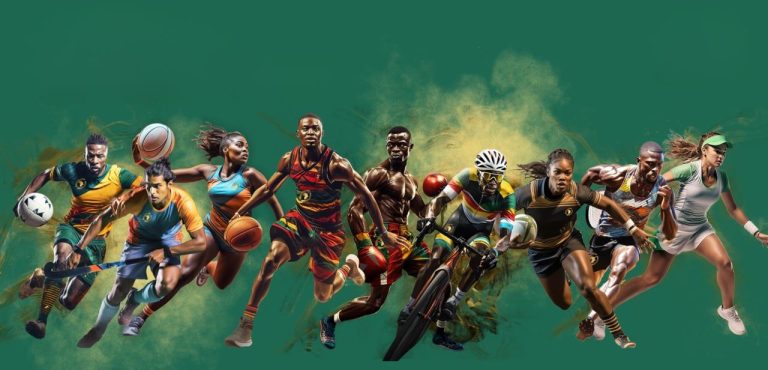
African games are filled with passion, loyalty, and pure talent. However, numerous clubs continue to depend on highly volatile sources of income such as sponsorships, player sales, or government assistance. The majority of them do not realize that they have one of the largest unexploited resource reservoirs in worldwide sport – merchandise. The Africa sports merchandise potential is enormous, but few clubs treat it as a serious business pillar.
This isn’t about selling shirts for fun. Merchandising in sports is a powerful tool that can enhance the identity of a team, a community, and also bring financial stability. This business alone, in the form of sports merchandise, generates a lot of money worldwide, to the tune of billions every year.
So, for African clubs, besides just being a means of financing, it could become a way of fundamentally changing the relationship between football and its environment.
Worldwide, the sports merchandizing market is predicted to exceed $50 billion by 2030, with the major contributors to the growth being jerseys, scarves, and collectibles. The likes of Real Madrid, Barcelona, and Manchester United are making over one-fourth of their entire income just from the sale of merchandise and licensing.
Now compare that with Africa, where most clubs barely track merchandise revenue. Only a handful – mainly in South Africa, Kenya, Tanzania, and Ethiopia – have semi-structured systems for product sales. The rest depend on inconsistent streams of income and miss out on what could be a stable, scalable source of growth.
Ignoring this potential isn’t just a business mistake; it’s a missed opportunity to connect emotionally with millions of loyal fans who already spend money on sports gear.
Besides the fact that sports merchandise revolves around clothing, it is also tightly bound to the culture, pride, and love that fans feel for their team. When a fan buys a jersey, he/she doesn’t simply buy a new piece of clothing; rather, in memory and identity, the fan becomes the owner of a share.
Just try to look at any city in Lagos, Nairobi, or Accra during a weekend. Everywhere you would see fans wearing shirts of Arsenal, Chelsea, or Real Madrid. But how frequently do you come across a person wearing an Enyimba, Asante Kotoko, or Gor Mahia jersey? Not very often. The loyalty is there, but the products haven’t.
Fans aren’t ignoring local teams. They simply don’t have access to authentic, affordable, or aspirational merchandise that reflects their pride. That’s where the transformation must begin.
People don’t buy jerseys because they need more clothes. They buy them because they want to belong. Every shirt, scarf, or badge tells a story – of family, victory, or home. Global clubs have built billion-dollar empires by selling that feeling.
African clubs can do the same by investing in brand storytelling. A great example is Kaizer Chiefs. Their gold-and-black identity is more than football; it’s part of South African urban fashion. They’ve created something fans want to wear both on and off the pitch.
When clubs combine their identity with emotion and culture, they make fans to be ambassadors. That is when products cease being products and become a means of expressing.
The continent, however, is not without some challenges despite the potential it has:
These issues could be fixed – but only through a plan, creativity, and investment.
Fake jerseys have gone viral. One can find them at cheap street markets in Lagos or in small kiosks in Nairobi. Apart from the fact that their prices are lower than the official jerseys, they also divert sales and destroy brand trust. However, clubs should not see vendors as their enemies and might even think of them as collaborators.
Firstly, clubs may regain the money lost through vendors by supplying them with affordable, club-approved merchandise and at the same time, keep prices accessible.
Another clever solution is the implementation of tiered pricing: luxurious jerseys for fans worldwide and simple, cheaper versions for local supporters. That way, everyone is included and the brand is kept intact.
Being accessible also means having an official store online. There is no need for an elaborate e-commerce platform; even a simple online store connected to social media could greatly increase the clientele base and allow fans living abroad to buy directly.
Europe’s model can’t simply be copied. The accomplishment of the business is largely based on the old-time infrastructures and worldwide exposure it has had over the years. Africa requires a model, which is able to handle the distinctive aspects of the continent – one that is imaginative, adaptable and a digital follower.
First of all, Latin America can be a source of some good parallels. With the help of such clubs as Boca Juniors and Flamengo, passion is being converted into profit in spite of the presence of economic constraints of a similar kind.
They rely on community pride, street culture, and affordable merchandise lines.
Conversely, Asian clubs have successfully developed online ecosystems, which are now their major source of income. A lot of them were selling merchandise digitally way before they even had physical stores. African clubs, however, have the opportunity to combine both worlds – linking cultural storytelling with strong online distribution.
African clubs are different. On one hand, the infrastructure is getting better, digital platforms are expanding, and there is an enthusiastic audience. On the other hand, the only thing that is lacking is strategy.
Through local production, creative partnerships, and diaspora engagement, clubs can invest in merchandise to make a move from survival mode to profitability. They have the power to create jobs, reinforce identity, and develop revenue streams that are sustainable and can go beyond the lifespan of any sponsorship deal.
Fans already have the passion. What’s needed now is the product. The question isn’t whether there’s potential; it’s whether clubs are ready to claim it. Until they do, Africa’s most valuable player – its merchandise market – will remain on the sidelines, waiting for someone to hand it a jersey.