
Home » Africa Cup of Nations » Page 6
Morocco AFCON 2025 Preview: The Atlas Lions Are Ready to Win
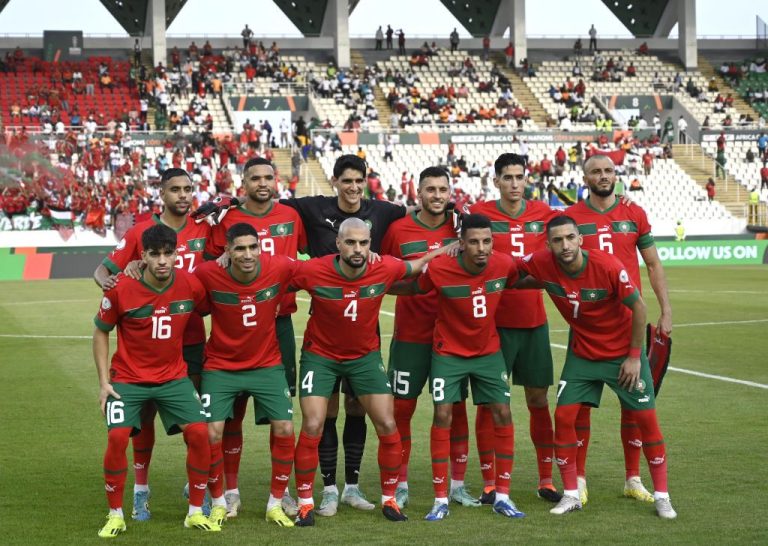
Morocco are walking into AFCON 2025 feeling like a team that finally knows what they’re capable of. They’ve been scoring freely and defending with tournament maturity. The main reason for excitement is simple: they now look balanced, confident, and ready for a long competition without melting down. Being hosts gives them both comfort and huge spotlight pressure to handle.
Morocco have been one of Africa’s hardest sides to beat in 2024. They have embarrassed opponents in qualifying, notched massive goals and constructed an unbeaten competitive streak. Because they earned hosting status early, they skipped AFCON qualification entirely. This valuable time allowed the coaching staff more flexibility for essential squad building through friendlies.
Regragui’s incredible World Cup 2022 semifinal run will be remembered for years but that won’t be all about nostalgia at the 2025 AFCON – this is also a critical opportunity to demonstrate consistency and desire.
Morocco are no longer a side built only on wide brilliance. Instead, they now carry midfield duelers, defensive leaders, and one of the continent’s most influential captains: Achraf Hakimi.
Morocco’s Recent Form Going Into AFCON 2025
Morocco have been getting results that truly turn heads, even in non-televised qualifying windows. For example, they hammered Congo 6–0 in June 2024 and then pushed Zambia aside 2–1 in the same international break. That counts as eight goals across just two competitive qualifiers. The scoring didn’t stop there, either.
In the Africa Cup of Nations Group C qualifying path, they previously blitzed Lesotho 7–0 and posted a stunning 5–1 away result at Gabon. Therefore, Morocco currently attack without mercy while meticulously protecting their shape. Their style is aggressive but controlled.
Their defensive numbers beautifully complement the strong attacking output. They conceded only a few goals across six recent competitive qualifiers, clearly showing mid-game control and spacing maturity. This level of discipline means they rarely stretch unless a deliberate press call is made. Nevertheless, this back four has shown it can survive tempo changes, recover positioning quickly, and look comfortable under pressure.
This 2024 streak includes some tricky micro lessons too, which is very helpful. Even when dominating Gabon away, they conceded an early transitional error goal. Yet, they closed the door quickly after halftime and adjusted their spacing to reduce central exposure. They also maintained chance creation from overlaps instead of forcing narrow entries, which shows tactical maturity.
The Coach Who Is Shaping Morocco: Walid Regragui
Walid Regragui has been the man in charge since 2022. He promised structure, identity, and tactical fairness across all player profiles when he walked in. His signature moment, of course, was the semifinal run at the World Cup 2022. He made a solid wall from his defence, favoured transitions and had one of the lowest concession records in the event.
Morocco conceded only twice in six games during that successful World Cup. Still, AFCON 2025 is a new test for tactical repetition on African soil. The margins here are always tighter, and the officiating is often softer than on the world stage. Consequently, Regragui must prove that his system works consistently against different styles of pressure.
His tactical DNA fits the demands of tournament football perfectly. Specifically, he builds a compact center-spine spacing and attacks once the opposition pass breaks their shape. He funnels initial buildup wide before reliably releasing overlaps instead of forcing central plays.
However, Regragui’s biggest win has been man management. He united big Europe-based profiles into a Moroccan tournament identity without any ego friction. This prevents individual breakdowns right when pressure spikes in a match.
Achraf Hakimi: Morocco’s Captain, Morocco’s Icon
Achraf Hakimi is the biggest football star in this generation of Morocco players. He acts as a key tournament leader who shapes Morocco’s psychological identity. Leadership credibility comes from being trusted in huge European competitions too, which he has done at top clubs across Spain, Germany, Italy, and France.
Crucially, this is the Moroccan armband, meaning extra emotional duty and vocal responsibility. His Morocco role acts like a bonus winger whenever transitions fire.
For instance, when Morocco recover the ball, Hakimi pushes high immediately to stretch the opponent’s shape. Midfielders then quickly hunt his release lane. Admittedly, this aggressive positioning adds creative risk, yet his elite recovery speed covers most mistakes quickly. His switches of play give Morocco a direct exit when high pressure smothers their buildup.
He opens play like a tempo valve, which gives Morocco positional freedom without forcing unnecessary central density. He also brings genuine fan closeness, with a personality that carries emotional relatability without forced theatrics.
Ayoub El Kaabi: One to Watch
The AFCON 2018 Golden Boot winner’s performances were spectacular in spite of the fact that El Kaabi’s career had declined until 2023 due to injuries.
When at Olympiakos FC, El Kaabi was the best player in the top division, and then also the top scorer of the 2023-24 UEFA Europa Conference League with eleven goals, and the top scorer of the 2024-25 UEFA Europa League, scoring 7 in eight games.
Thus far, he has used his ability to move between center backs wisely, which is a major advantage for him on progressive passes in windows. Morocco needs proven finishers they can trust, not surprise forwards who collapse under loud stadium energy.
His excellent instincts might give Morocco a goals insurance policy if transitional lane attacks deliver controlled entries. Morocco’s attacking width normally decides exactly how many chances the striker sees. Consequently, El Kaabi must stay sharp, not greedy, because sharper wins tighter finals than flashy. He already scored historic big tournament goals and looks entirely comfortable with noise.
- Clinical finishing angles
- Smart movement between defenders
- Aggressive box hunger at ball recovery
- Composure during physical duels
- Rare tournament pedigree value
Morocco Squad Depth & Key Players for AFCON 2025
The Morocco AFCON 2025 group is more a structure that has some validity beyond its mere compilation of players. For example, in goal, Bono reliably provides secure distribution and leadership calm from deep areas. On the left of the back four, Noussair Mazraoui adds defensive flexibility and inverted buildup support. Furthermore, center-back leaders like Nayef Aguerd ensure that aerial coverage and defensive duels are consistently answered quickly.
Off the bench, Morocco can call on profiles used to creating different tactical phases. Sofiane Boufal gives narrow attacking lane creation when wingers need rotation or a tempo change. Meanwhile, Ismael Saibari brings fresh legs and direct ball progression from midfield to wide areas late in matches. Abde Ezzalzouli is an explosive wide duel and dribble profile used to carrying progressive entries on tight ground.
This balance gives Walid Regragui’s Morocco rare, reliable gear-switching control. This team blends youth promise with senior stability, which gives the coach advantage to adjust his shape and rotation depending on opponent tempo, crowd noise, stage stakes, and heat.
Morocco Tactics, Formation & Identity at AFCON 2025
Morocco typically lines up in a flexible 4-3-3 or occasionally a 4-2-3-1. The true secret is Morocco’s remarkable ability to press without compromising its vital defense spacing.
If the midfield misses pressing triggers, the pivot collapses back instantly to close the central lanes. This discipline is what defines their high-level identity. Therefore, here is the tactical identity Morocco are carrying into the tournament:
- In possession: Circulate, and then hunt the vertical switch. Pin fullbacks high with wingers. Invert a fullback to support buildup if needed. Wait for the funnel, then push box entries fast.
- Out of possession: Sit compact, then fire on a trigger. Press aggressively only if rest defense is safe. Force opponents wide into slower lanes. Win the second ball early to slow shape escapes.
- Transition identity: Recover, connect, overlap, release, score. Keep spacing between fullback and pivot. Avoid early forcing, attack late release spaces.
Morocco squad for AFCON 2025
Goalkeepers: Yassine Bounou (Al Hilal), Munir El Kajoui (RS Berkane), El Mehdi Al Harrar (Raja Casablanca).
Defenders: Achraf Hakimi (Paris St-Germain), Mohamed Chibi (Pyramids), Jawad El Yamiq (Al-Najma), Romain Saiss (Al Sadd), Abdelhamid Ait Boudlal (Rennes), Nayef Aguerd (Marseille), Adam Masina (Torino), Noussair Mazraoui (Manchester Utd), Anass Salah-Eddine (PSV Eindhoven).
Midfielders: Oussama Targhalline (Feyenoord), Sofyan Amrabat (Real Betis), Ismael Saibari (PSV Eindhoven), Neil El Aynaoui (AS Roma), Bilal El Khannouss (Stuttgart), Azzedine Ounahi (Girona).
Forwards: Brahim Diaz (Real Madrid), Ilias Akhomach (Villarreal), Chemsdine Talbi (Sunderland), Youssef En-Nesyri (Fenerbahce), Ayoub El Kaabi (Olympiakos), Soufiane Rahimi (Al Ain), Abdessamad Ezzalzouli (Real Betis), Eliesse Ben Seghir (Bayer Leverkusen).
Morocco Group A Outlook & Tournament Hopes
Morocco is the team to beat in Group A at AFCON 2025. They occupy space like a team that wants to strike early and kill rhythm for opponents using width. Yet, Group A opponents will likely try to clog central lanes and force severe patience tests on the hosts. Because of that, midfield calm must arrive fast.
This Moroccan generation feels significantly calmer than past cycles. They consistently push a compact center setup, and then punish space late in the game. Being hosts also gives Morocco fewer travel legs early, which helps squad rotation without draining vital stamina. The bracket path grows clearer if Morocco top their group, as this helps avoid heavyweight matchups too early.
AFCON Historical Performance: Morocco AFCON Legacy
Morocco did enjoy some good results but also setbacks throughout its past at AFCON. In 2004, the team also came within a second title but eventually lost to Tunisia. Before that, the team finished third twice more (in 1980 & 1988).
Throughout history, Moroccan teams used tremendous wing play combined with a group of very solid defenders to be able to perform well in the tournament. However, they often suffered from inconsistent midfield coverage and a tendency for too much forcing early in the tournament chain.
In contrast, 2022 drastically changed the global respect narrative for Moroccan football. It made Morocco believe they can play giants and win structure battles effectively. AFCON trophies, however, require more than World Cup arcs; they need game-to-game spacing control. Ultimately, this cycle feels stronger because they have better pivots underneath fullback height.
Moroccan Supporters & Stadium Factor
Moroccan supporters are famously relentless inside the stadium; they genuinely don’t stop making noise. Still, emotional pressure travels too if early goals do not land quickly. Morocco look mentally built to carry that kind of pressure this time, though. The home crowd stays engaged even in tactical stalemates, pushing tempo shifts with vocal energy instead of negativity.
Fixtures at home help Morocco schedule recoveries, rotations, rest, and training without debilitating travel fatigue. Nevertheless, tactical tempers can break quickly when stadium noise rises to a fever pitch. Morocco have the tools to turn that into a strong advantage.
If Morocco use the noise as a tempo weapon, and not a panic trigger, their Group A dominance can easily travel into the knockout nights too. Morocco are also comfortable killing opposition rhythm by circulating play wide when possession grows flat. Stadium energy pushes both overlaps and passing bravery in key moments.
Form Doesn’t Guarantee Trophies, But Morocco Look Built for One
Morocco’s 2024 form strongly suggests dominance is possible. Tournament football always tests center calm more than wide brilliance alone, however. Morocco’s main challenge might be the patience needed to unlock opponents when low blocks clog wide funnels. Midfield rest defense matters more than fans often appreciate.
Penalty night composure consistently travels with Achraf Hakimi’s quiet leadership. Furthermore, Ayoub El Kaabi gives them proven box hunger finishing when chances are rare. Nothing is ever automatic in AFCON knockout nights. Yet, if Morocco’s scoring comfort and center spacing calm travel reliably into the elimination games, they have a genuine case for the trophy.
Final Prediction
Morocco will confidently top Group A and reach the semifinals. They have a real chance to go all the way if they can successfully unlock low blocks without losing spacing during phase switches.
The penalty shoot-out format favors the team that does not break down under pressure, and Morocco appear to be mentally prepared to sustain their high level of energy as they have produced a quality finisher in the form of Ayoub El Kaabi who has an impressive track record of finding the back of the net in tight spaces.