Categories
Football

Ismail Kigozi Tribute: Celebrating a Ugandan Football Legend

Ismail Kigozi Tribute: Celebrating a Ugandan Football Legend

Ismail Kigozi Tribute: Celebrating a Ugandan Football Legend

Looking at Uganda’s football history for the past twenty years, there are a few names that have stuck. They weren’t loud, however, they represented themselves with a respectfulness that people admired. Ismail Kigozi is one of those names. This tribute isn’t written as a way to sound dramatic; it is an opportunity to reflect on the type of player he was, the type of individual he evolved into and why so many people felt such a deep loss in his passing.

Early Beginnings in Football

No-one begins their football career as a polished player and neither did Kigozi. The way he grew up playing was similar to most young players in Uganda. The fields were dusty, the balls were borrowed, and the games went on well into the evening. The difference between Kigozi and the other young players wasn’t based on a single dramatic moment or an immediate jump to the top.

The patience he developed with himself and the time he committed to training when no one else was around was the difference. He never spoke of his accomplishments, he always showed up to train repeatedly and believed that each small step forward mattered.

Making His Name at Masaka LC

His move to Masaka LC is where he started turning heads. Fans noticed him first because of how calm he looked with the ball. He didn’t panic. He didn’t rush. He played like someone who understood the rhythm of the game better than most around him.

At Masaka, he learned how to handle responsibility. He became the player coaches relied on when matches got messy. It was also the stage that convinced bigger clubs he was ready for something more.

The SC Villa Chapter

SC‍‌‍‍‌‍‌‍‍‌ Villa was the one that put him in a bigger spotlight; however, he was able to handle it as if he had been rehearsing for this very occasion. He went from being just a talented midfielder to be a recognizable figure in Ugandan football.

Kigozi was the driving force behind the SC Villa side that won the Uganda Premier League in 2004. He was the energy that kept the team alive, making plays and calming the players, accelerating the game when it got ‍‌‍‍‌‍‌‍‍‌slow.

Wearing the Uganda Cranes Jersey

Every Ugandan player dreams of representing the Uganda Cranes in international competition.   Therefore, when Kigozi received that opportunity, he was no mere fill-in. He brought personality into that midfield.

He helped younger players ease into the squad. He wasn’t harsh or distant. He talked to them, supported them, made the camp feel like a place you could grow. On the pitch, he kept things steady. One good decision after another. You always felt like he had the match under control.

Those who watched him in national colors still talk about how proud he looked whenever the anthem played. It mattered to him.

Later Years and the URA Period

When he moved to URA, he was already a seasoned player. The experience showed. He wasn’t trying to reinvent his game. He just wanted to keep contributing and help others along the way.

Many young midfielders playing for URA looked to Kigozi for support while learning the skills of the game. While these actions do not appear in highlight reels, they can ultimately shape the career of young players.

Once Kigozi completed his time at SC Villa, he continued to remain connected to football. He still showed up at local matches and events, always ready to share what he knew.

The Person Behind the Player

People talk about his humility more than anything else. He wasn’t loud. He didn’t chase attention. He connected with people easily because he treated everyone with respect.

Teammates describe him as steady. Someone you could rely on. Someone who listened. Someone who didn’t need titles or praise to do the right thing.

That quiet leadership is rare. It’s probably why so many players felt his influence even after they moved on to different clubs.

The Day the News Came

When the news of his death reached the football community, it hurt. The responses that followed felt sincere, not forced. Officials from FUFA ex-teammates, coaches and supporters all let out anecdotes which in essence were the same: an admirable man, a clever player and a person who left a lasting influence.

Certainly, the big events were recalled by most of the people, however, numerous people also thought of the smaller events.

His death was not only the loss of a former player. It was the loss of a person who, it seemed, had quietly influenced the ‍‌‍‍‌‍‌‍‍‌game.  

The Legacy He Leaves Behind

Kigozi’s legacy doesn’t sit in a trophy cabinet or a list of stats. It sits in people. The ones he encouraged. The ones he guided. The ones who watched him and learned something from the way he played.

Some of his lasting influence includes:

  • The midfielders who studied his positioning
  • Younger players who shaped their habits after his example
  • Fans who still talk about his calm presence on the pitch
  • Clubs that gained from his leadership and maturity

A legacy like that doesn’t fade quickly.

Categories
Football

Ugandan Football Identity: The Namboole Renaissance

Ugandan Football Identity: The Namboole Renaissance

Ugandan Football Identity: Namboole Sparks a New Era

Introduction: Why Ugandan football identity matters

For a long time, the debate has raged over what constitutes Ugandan football identity. Is it the grittiness of survival at all costs? Or perhaps it’s the creativity and self-expression? The narrative of Ugandan football has been one based on talent that never had direction.

When the Uganda Cranes ran out under the shining lights of Namboole against Mozambique it transcended simply a 4 – 0 win. It was finding out what Ugandan football could and probably should look like. For the first time in ages, a team played in coherence, identity and with purpose. That night was more than a win. It was what felt like the resurgence of a national identity that had been buried beneath pragmatism

The pragmatic origins of Ugandan football

Ugandan football has long been tied to pragmatism. Under Milutin “Micho” Sredojević, the Cranes became known for resilience, not imagination. His style was functional: compact lines, defensive solidity, and hard running. It was football that squeezed results from tight games, but rarely inspired.

  • Games were often cagey, ending in narrow wins or stalemates.
  • Attackers were isolated, left to chase long balls or feed off scraps.
  • The midfield focused on containment rather than creativity.

Ugandan fans appreciated the discipline but hungered for something more. They wanted to see a team that reflected the creativity and rhythm of the nation, not just survival instincts.

Sébastien Desabre and the first spark of change

When Sébastien Desabre first arrived, there was some optimism the identity might shift. Uganda shocked DR Congo 2 – 0 at the 2019 Africa Cup of Nations, and for a flavour of the type of football the nation could epitomize: high-energy pressing, quick passes, and attacking exuberance.

That match sparked nothing, and ultimately extinguished. Desabre’s exit, meant Cranes stood still. The opportunity to build an offensive identity slipped away, replaced by managerial uncertainty.

The lost years: McKinstry, Micho’s return, and stagnation

The years after 2019 became a period of drift. Johnathan McKinstry experimented without stamping authority. Micho returned, doubling down on the pragmatism that had once delivered results but now felt outdated.

Ugandan football didn’t collapse, but it stood still. Matches lacked imagination. The Cranes survived, but they didn’t evolve. Fans who had seen what was possible under Desabre grew restless. By 2023, the conversation was no longer about results but about identity – or the lack of it.

Paul Put’s arrival and the Namboole rebirth

Enter Paul Put. At first, his appointment seemed late. Uganda had wasted years searching for direction. But under the Namboole lights against Mozambique, his philosophy came alive.

The Cranes didn’t just win 4–0 – they dominated. Every part of the team moved in sync:

  • The goalkeeper commanded with authority.
  • Defenders did more than clear the ball. They started plays.
  • Midfielders kept the ball with ease.
  • The forward ran all the time and made things hard.

It was football with expression. For the first time in years, Uganda looked like a team with identity, not just a strategy.

Key performances that defined the night

Salim Jamal Magoola’s command

At the back, Salim Jamal Magoola offered calm assurance. Unlike previous keepers who struggled under pressure, Magoola set up his back line and showed strength. Every save he made was a big one.

Elio Capradossi and the backline

Elio Capradossi led the back line. He was a leader and saw what would come next. The other debut, John Obita, was very good. He was calm and played like a veteran. On the sides, Elvis Bwomono and Aziz Kayondo went from back to front. They showed that fullbacks could make new plays.

The midfield axis

Khalid Aucho and Kenneth Semakula were the heart of the team. Aucho’s steel and Semakula’s composure gave the Cranes both grit and guile. They were the foundation upon which attacks were built.

Allan Okello’s redemption

Allan Okello had questions to answer after past disappointments. Against Mozambique, he scored to stifle the critics with a long-range goal, two assists and playmaking going deep. He played not as an individual, but as the maestro of a national orchestra.

Rodgers Mato and the wings

Rodgers Mato stole headlines with two goals, but his tireless work off the ball mattered just as much. Jude Ssemugabi’s pressing and willingness to sacrifice for the team showed why identity is about more than star players.

Steven Desse Mukwala’s unseen contribution

Although he didn’t score, Mukwala’s aggressive pressing and link-up play set the pace of Uganda’s fast-paced approach. In Put’s system, effort mattered as much as finishing.

How the Cranes’ style reflects national identity

Football is never just about tactics. It reflects culture, pride, and rhythm. For Uganda, pragmatism felt like complacency. The Namboole performance exhibited something more genuine:

  • Boldness that matches the vibrancy of Ugandan fans.
  • Creativity reflecting the indigenous style of football.
  • Unity that connects team and country.

This is why identity is important. A victory goes away, but a style doesn’t.When fans see themselves in the way their team plays, belief grows stronger than results.

Lessons from the past and the road to the future

Uganda’s history is full of moments where identity flickered but didn’t take hold. The 2017 win over Egypt was historic, but reactive. The 2019 victory over DR Congo hinted at a new style, but it wasn’t sustained.

Paul Put’s task is to make sure Namboole isn’t another isolated miracle. The Cranes need continuity, not just flashes. With the right vision, Uganda could aim for more than AFCON qualification – it could dream of a World Cup stage.

To achieve that:

  • Coaches must stick to a coherent philosophy.
  • Young players need to be developed with identity in mind.
  • Results must come, but not at the cost of expression.

A renaissance of belief

Ugandan football has wandered between pragmatism and promise for years. At Namboole, the Cranes finally showed what a true Ugandan football identity could look like.

Paul Put’s vision is late, but it is timely. He has given Uganda more than a result; he has given it belief. If Desabre lit the spark in 2019, Put fanned it into flame in 2025.

The Cranes didn’t just beat Mozambique. They announced that Ugandan football is ready to embrace its identity. For fans long starved of joy, the wait might finally be over.

Categories
Football

Brian Ssenyondo: Uganda’s Youngest Coach to Make FIFA World Cup History

Brian Ssenyondo: Uganda's Youngest Coach to Make FIFA World Cup History

Brian Ssenyondo: Uganda’s Youngest Coach to Make FIFA World Cup History

As the final whistle blew at the Stade de Marrakech on the shining afternoon of April 12, 2025, history was not just written; it was roared into being.  Uganda made it to a FIFA World Cup for the first time ever, thanks to the Uganda Cubs, their under-17 league team.  Brian Ssenyondo, who is 31 years old, was the genius who made this impossible feat possible.

Who Is Brian Ssenyondo?

Early Life and Masaka Roots

Born on August 23, 1993, in Fort Portal and raised in Masaka’s football-crazed neighborhoods, Brian Ssenyondo was surrounded by people who loved the game.  He started his trip walking barefoot on dusty fields in Uganda under a big sky.  He understood a lot about the game, even when he was a child.

 A young friend says, “He would talk about tactics at a time when other kids were still arguing about who gets to be Ronaldo.”

That early passion and analytical mindset laid the groundwork for a remarkable coaching career.

Coaching Start and Rise at Synergy FC

Instead of becoming a player like most of his friends, Ssenyondo started teaching when he was in his early 20s.  While he was in charge of Synergy FC, they were not a very well-known team. He got them to the semifinals of the Uganda Cup.  This accomplishment made a lot of people notice him and put his name on the football map.

His work at Synergy wasn’t just about results—it was about building systems. He emphasized discipline, preparation, and modern coaching methods, even at the grassroots level.

The Rise of Kitara FC’s Mastermind

But it was his time at Kitara FC that made him famous in Ugandan football history. That run led to jobs at Mbarara City and UPDF FC.

He planned the campaign that led to Kitara FC’s first-ever Uganda Cup win in 2024. It was a turning point not only for the Hoima-based club but also for the coach.  Under his leadership, a team that was once seen as constant underdogs turned into a disciplined, smartly trained unit that could beat giants. The victory, secured in front of a raucous crowd, reverberated across the national football landscape, cementing his reputation as one of Uganda’s most visionary young tacticians.

Tactical Philosophy and Coaching Style

Affectionately known as “ Coach Muto (“young coach”), Brian Ssenyondo is known for being very clear about strategy and sticking to the rules. His desire to keep learning is shown by the fact that he already has a CAF B License and is now working toward his CAF A License.

What sets Ssenyondo apart is his belief in preparation and education. He introduced video analysis sessions for his U17 squad, a rarity in Ugandan youth football. He also supports a mixed coaching style that combines strict defense with freedom of expression.

“We can’t depend on miracles. We need structure, scouting, and belief,” he emphasized after the Cubs’ qualification.

The Road to Qatar—Uganda U17’s Journey

Appointment and Immediate Impact

FUFA named Ssenyondo head coach of the Uganda Cubs in late 2024.  He rapidly evaluated his team and applied a strict 4-3-3 strategy with obvious pressing triggers, given little preparation time.

CECAFA U17 Success

The Cubs, under his direction, ruled the CECAFA U17 Zonal Qualifiers, overcoming formidable regional rivals including Kenya and Tanzania.  Their performances revealed maturity and coherence beyond their age.

AFCON U17 Campaign

Next came the grueling Africa U17 Cup of Nations in Morocco. Ssenyondo’s boys showcased bravery and technical growth, narrowly edging past teams with stronger reputations and deeper resources.

Playoff vs The Gambia—The Defining Moment

Everything came to a head in a tight playoff game against The Gambia.  With a spot in the World Cup on the line, Ssenyondo’s strategy was clear: strong pressing in the middle, keeping the ball, and quick changes of possession.

The result? Uganda’s first-ever journey to a FIFA World Cup at any level was secured with an amazing 2-1 win.

Ssenyondo’s Vision for Ugandan Football

Ssenyondo is not just a coach—he’s a reformer. He is very open about the fact that everyone in Uganda should be able to get an education in coaching. His long-term vision includes:

  • Creating youth academies that balance education and sport
  • Encouraging more female coaches and inclusivity in the system
  • Expanding scouting networks beyond traditional footballing hotspots

He also supports partnerships with European clubs for knowledge transfer, internships, and coaching internships.

Legacy and Impact

Brian Ssenyondo’s story is more than just a success story for a coach; it shows how much Uganda can grow. His journey from Masaka to the FIFA U17 World Cup shows what is possible when you have a plan, work hard, and take advantage of chances.

With the Uganda Cubs heading to Qatar, they may be underdogs—but with Coach Muto at the helm, they are also trailblazers.

“We’re not just representing Uganda. We’re redefining it.”

Categories
Football

Rise of Ugandan Football: From Youth Triumph to Global Ambition

Rise of Ugandan Football: From Youth Triumph to Global Ambition

Rise of Ugandan Football: From Youth Triumph to Global Ambition

The Rise of Ugandan Football. A new power is starting to grow in the shifting landscape of African football not from the conventional heartlands of North or West Africa but from the East. Long relegated to the margins of the continental football power, Uganda is boldly pursuing a path toward the international stage. The country’s recent U-17 World Cup qualifying not only represents a turning point in young football but also an indication of a deeper structural change starting to take shape in East Africa’s most vibrant footballing country.

History Revisited: East Africa’s Forgotten Football Legacy

Few recall that in the first years of the Africa Cup of Nations, it was East African teams—Sudan, Ethiopia, and Uganda—that stood among the continent’s top, while present African football stories have focused on Egypt, Nigeria, Ghana, and Senegal. Once a competitive hotspot, the CECAFA region lost relevance over time as other countries accelerated infrastructure and talent development investment.

The arc of history seems today to be curving back toward its beginnings. The growth of Ugandan football is not just about recovering a lost past but also about reinventing it—by means of deliberate youth development, better government, and a clear future vision.

El Jadida: The Night the Cubs Roared

The Ugandan U-17 national team—affectionately called the Cubs—made history in Morocco. Uganda fought back from an early deficit to win 2–1 in a dramatic playoff match against The Gambia, so qualifying for a FIFA World Cup at any level for the first time in history. It was a statement of intent more than a football outcome.

After conceding a shock opener in the first minute, the Cubs responded with striking maturity. James Bogere, the name now echoing across Ugandan households, scored twice in the first half, sealing a victory that would reverberate far beyond the pitch. Bogere’s performance was emblematic of a generation that has come of age within Uganda’s reformed football ecosystem.

The Engine Behind the Victory: FUFA’s Long-Term Vision

This breakthrough was no accident. It was the outcome of a persistent, strategic effort by the Federation of Uganda Football Associations (FUFA). The FUFA Technical Master Plan—a national strategy that uses web-based talent tracking, deploys district-level scouts, and anchors elite competitions like the FUFA Juniors League—lies at the core of Ugandan football’s rise.

By means of this pipeline, Uganda has developed players like Travis Mutyaba, Allan Okello, and now Bogere—young stars shaped in a system that values merit and tenacity. The Cubs are not unusual; they are the most recent proof of the effectiveness of organized young investment.

Hon. Magogo Moses Hassim, president of FUFA, admitted the historic character of the Cubs’ qualification, which he ascribed to government assistance and long-term preparation. He underlined that young achievement in Uganda is a group effort including parents, schools, communities, and national leadership.

Beyond the Scoreline: National Impacts and Global Ambitions

This landmark qualification has unleashed ripple effects across the country:

  • Youth academies report surging interest from aspiring players and parents.

  • Grassroots clubs are gaining traction among local sponsors.

  • UPL clubs are intensifying their focus on young talent.

  • Community engagement in football is deepening, turning spectators into stakeholders.

The timing is crucial. Already getting set to co-host the 2025 CHAN and the 2027 AFCON—two significant continental events promising to improve infrastructure, drive economic activity, and more deeply embed football into the cultural and political conversation of Uganda.

The Uganda Premier League: Laying the Domestic Bedrock

The slowly developing Uganda Premier League (UPL) lies behind Uganda’s international success. Among Africa’s oldest continuous leagues, the UPL has welcomed change with fresh zeal—emphasized by a calculated turn toward commercialism, fan involvement, and infrastructural development.

With 95% of players drawn from local talent, the UPL serves as a crucible for national development. Clubs like Villa SC, KCCA FC, and Vipers SC are pushing boundaries, often under resource constraints, to produce players capable of representing Uganda on international stages.

According to UPL Chief Commercial Officer Matovu Jovin, the goal is clear: to position the league as a top-tier destination in African football through better broadcasting, modern stadiums, and partnerships with global stakeholders.

Preparing for Qatar 2025 and Beyond

With a historic ticket to the FIFA U-17 World Cup 2025 in Qatar secured, preparations are underway. FUFA has outlined plans for

  • International training camps and friendlies

  • Support from FIFA and CAF in logistics and tournament readiness

  • Academy partnerships to offer players career-shaping experiences abroad

For Ugandan football, this year is a turning point of great importance. This year is significant not only for the development of a competitive U17 team but also for demonstrating to the world that Uganda is not only ready to participate but also to compete at the highest level.

A Nation Behind Its Cubs: The Cultural Shift

The rise of Ugandan football is not confined to the pitch. There has been a dramatic surge in football culture nationwide.

  • Schools like Blessed Sacrament Kimaanya in Masaka are producing national-level players.

  • Ugandan football fans are mobilizing around local clubs more than ever before.

  • Media coverage of youth football has increased dramatically.

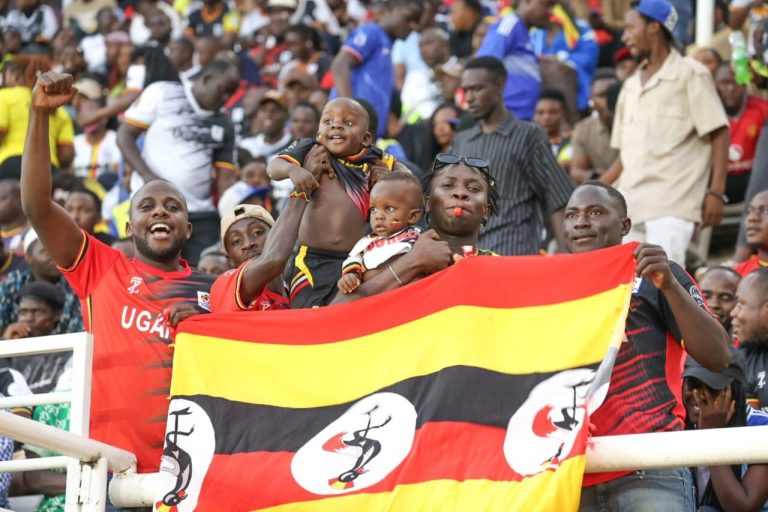
From busy Kampala areas to rural villages, football is more than a pastime; it’s an engine for social mobility, national pride, and international fame. The success of the Cubs is driving a movement that inspires young people to dream bigger.

Diaspora Dreams and Global Pathways

As Ugandan players begin to draw interest from European scouts, especially those heading to Qatar 2025, the future shines bright. James Bogere has already hinted at his dream of playing in Europe. He knows the world will be watching.

FUFA is also working to create pathways for Ugandans abroad—with planned collaborations with diaspora coaches, clubs, and mentors to guide talented youth toward international opportunities.

This approach ensures that the rise of Ugandan football is not a single wave, but a continuous tide.

Final Thoughts: The Rise of the Cubs, the Rise of a Nation

Uganda’s U17 qualification is far more than a sporting triumph. It is a cultural watershed and a strategic milestone. It reflects a nation awakening to its potential, guided by visionaries, sustained by communities, and driven by its youth.

The Cubs are not only Uganda’s first representatives at a FIFA World Cup—they are pioneers of a new era. As the countdown to Qatar 2025 begins, one truth is clear: this moment is not the end of the story—it is the beginning of something extraordinary.

The rise of Ugandan football, once forgotten in the annals of African greatness, is back. And this time, it’s here to stay.